What does «certificado no encontrado» mean?
When you register your scooter on the online office (sede electrónica) of the DGT, Spain's traffic authority, the «Datos del vehículo» (Vehicle details) step asks for the certificate number of the VMP (personal mobility vehicle). If the online office doesn't recognise the number you enter, it won't let you continue: this is the warning many users see as «certificado no encontrado».
That number isn't the serial number or your future registration number. It's the number an authorised laboratory gives each make, model and version of scooter when it certifies it.
1. Check that you've copied the number correctly
- Format: a letter and 4 digits, for example B1134. For the individual certification of a single scooter, LU and 4 digits. If what you have is longer or doesn't follow that format, it isn't the certificate number.
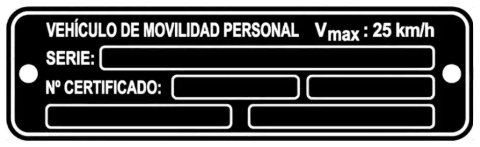
- Where it is: on the manufacturer's black metal plate, in the «Nº certificado» field. The serial number is on the same plate: don't mix them up.
- The technical data sheet: this is the document the DGT asks for, and it must show the certificate number.
- Copy it exactly, character by character, and watch out for the letter O and the zero.
2. Look it up in the DGT's list
On its personal mobility vehicles page, the DGT publishes the list of certified models, sorted by make. Look for your exact make and model and check the version (Pro, Lite, Max…): each number corresponds to one make, model and version, and some models have more than one number.
If your model appears with a different number, use the one on the list and check where you got yours from. The online office itself says that if you don't have the number but know the make and model, you can look it up in that list.
3. If your model isn't on the list
- It may be a recent certificate. The laboratory sends the certificate to the manufacturer and the DGT, but how long it takes to become available isn't published. Try again in a few days and ask the manufacturer or the shop for a copy of the laboratory's certificate.
- It may not be a genuine number. Some imported scooters carry numbers that don't correspond to any certificate. If it was sold to you as certified, complain to the seller.
- Approval from another country isn't enough. To register it as certified, the number has to be issued by an authorised laboratory.
- It may not be certified. In that case it has no certificate number: see the next section.
What if your scooter isn't certified?
You have two options:
- Register it as non-certified, if it was sold before 22 January 2024. On the online office you tick the non-certified vehicle option («vehículo no certificado») and register it with its make, model and serial number. It can be ridden until 22 January 2027; after that, it can't. We explain it in what to do with a non-certified scooter.
- Apply for an extraordinary certification from an authorised laboratory. You take in the scooter and whatever technical documents you have, the laboratory runs non-destructive tests and the result can be positive or negative. The list of laboratories is on the DGT website.
If your scooter was sold after 22 January 2024 and isn't certified, it can't be registered as non-certified: talk to the seller, because since that date the models on sale must be certified.
What if you'd already paid the fee?
Don't pay it again. If the registration wasn't completed because of an error, start again and, at the fee step, choose «Ya tengo una tasa que quiero usar» (I already have a fee I want to use). More details in what to do if the fee payment fails.
Would you rather leave it to us?
We register it for €35 all inclusive, fee included, whether it's certified or not, and we check the details before submitting them. You normally have the registration certificate in under 24 hours once the documents are complete. With your Spanish driving licence you don't need Cl@ve or a digital certificate.
Frequently asked questions
Where is my scooter's certificate number?
On the manufacturer's black metal plate, in the «Nº certificado» (certificate number) field, and on the technical data sheet. It's a letter and 4 digits, for example B1134.
Is the certificate number the same as the serial number?
No. The serial number identifies your scooter and the certificate number identifies the certified model. Both are on the manufacturer's plate, but in different fields.
My model isn't on the DGT's list. What do I do?
Check the exact make, model and version. If it still doesn't appear, ask the manufacturer or the shop for the laboratory's certificate. If they don't have it, the scooter isn't certified: you can register it as non-certified if it was sold before 22 January 2024, or apply for an extraordinary certification.
Can I register the scooter without a certificate number?
Only if it isn't certified and was sold before 22 January 2024. It is registered as a non-certified vehicle and can be ridden until 22 January 2027.
Do I have to pay the fee again if the registration fails?
No. If you've already paid the fee and the registration wasn't completed because of an error, start again and choose «Ya tengo una tasa que quiero usar» (I already have a fee I want to use).
Would you rather we did it for you?
We register it for €35 all inclusive · 100% online · certificate in under 24 hours · licensed gestoría no. 4213
Register my scooterOfficial sources (in Spanish)
- DGT online office: VMP registration: vehicle details, certificate number, non-certified vehicles and how to reuse the fee.
- DGT: personal mobility vehicles: list of certified models.
- DGT: VMP certification laboratories: authorised laboratories.
- VMP Characteristics Manual (BOE): certificate number and extraordinary certification (section 31).
- Royal Decree 52/2026 (BOE, 30/01/2026): non-certified scooters (first transitional provision) and extraordinary certification (Annex XIX, section 5).